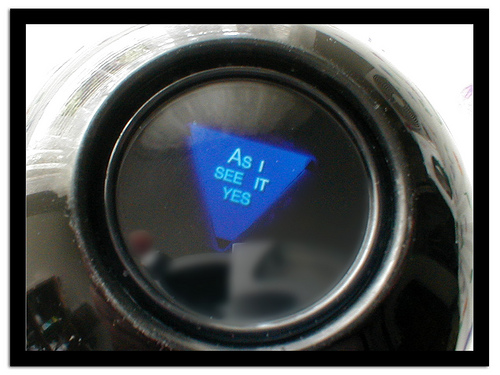
Buy Yes No Maybe Book
Articles Tagged with
career coach

Career Coaching, Meaningful Work

Whatever Fuels Your Fire in 2019

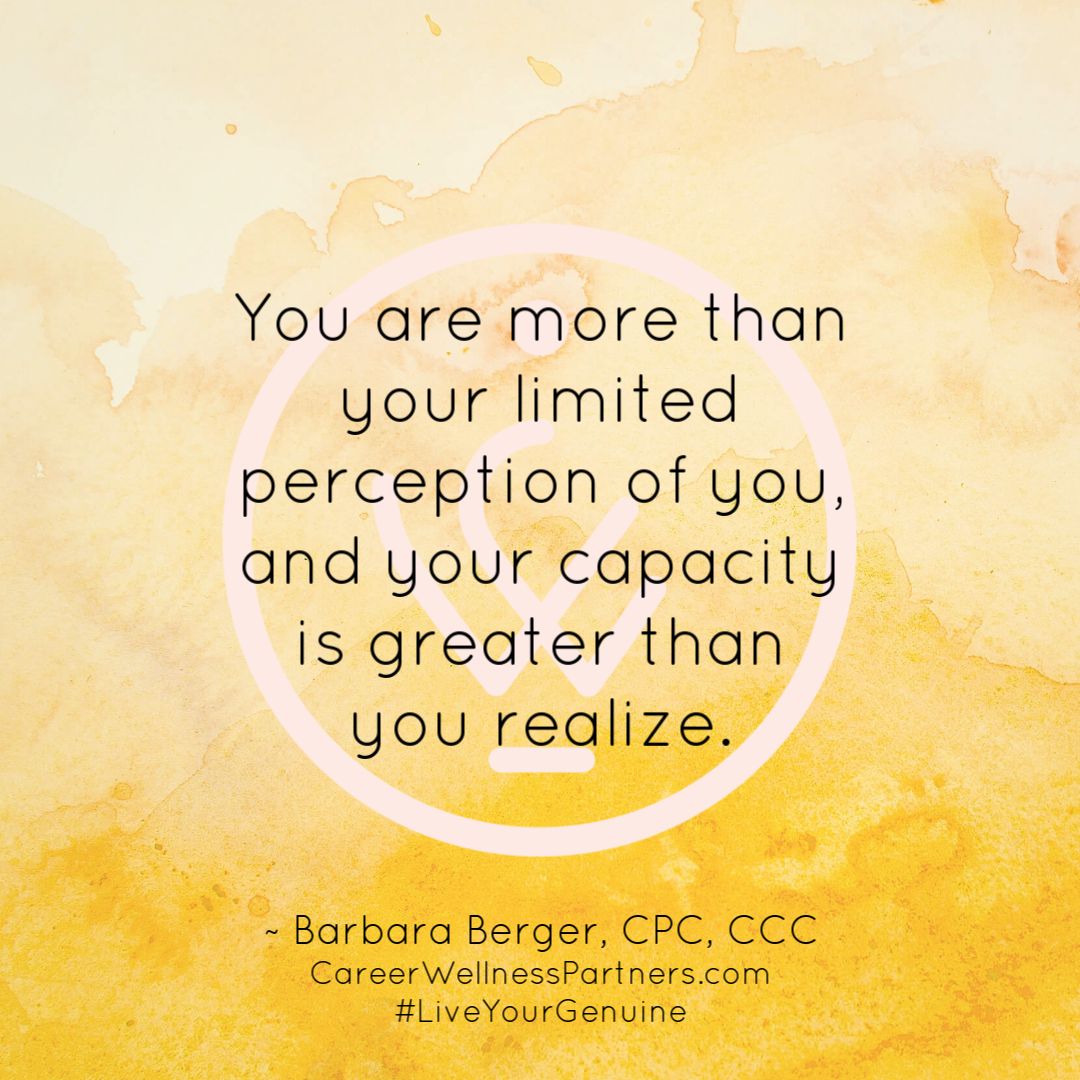
You are more than your limited perception of you, and your capacity is greater than you realize. This is why I became a coach. Although I couldn’t articulate it in that way 5 years ago, I knew that personal growth was where I belonged, and it made sense to use my understanding of the hiring process and my interest in career development as a focus.

Five years later, I am more deeply in love with the coaching process and the impact it can have when done well. I know, because I’ve been in the seat of the coachee. The transformation I have experienced due to my continued training with some of the best coaches out there fuels a perpetual fire to help reveal people to themselves…their beauty, strength, wisdom, and worth.

My wish is that you find a way to fuel whatever fires YOU up so you can begin to #LiveYourGenuine in 2019!  Happy Holidays!

Uncategorized

LinkedIn’s Virtual Mentoring: A Wake-Up Call for Companies

Your employees need career help. So much so that LinkedIn is testing a new feature that matches professionals seeking career advice with mentors at the ready.  

There is no arguing the value of a fantastic mentor. Suzi Owens, group manager of Consumer Products, Corporate Communications at LinkedIn, is quoted in a FastCompany article about the new service as saying, “[The service] is not meant to be a replacement for long-term mentorship. It’s meant to tackle those ‘quick question’ requests such as whether you are taking the right approach in different scenarios.”

The article explains that the program was launched in part due to the changing workplace and the shorter amount of time employees are spending with one employer. Both issues make it difficult to establish solid mentor-mentee relationships and this new service, Owens says, is  “a new form of mentorship that’s virtual, lightweight, and that fits today’s changing workplace.”

Agreed, times have changed and old strategies no longer work. And yes, mentoring and coaching are different things but your employees need career advice. Period. It’s time you rethink how you want them to get it.

Companies who want to differentiate themselves, and demonstrate commitment to employees’ individual career development goals can do so by finding a way to offer this benefit in house.  A few ideas:

  1. Carve a space in your corporate wellness program to provide the confidential career service that your employees desire. After all, career stress is a leading contributor to health issues including depression, obesity, sleep issues, addiction and more that your wellness programs try to address.
  2. Collaborate with a qualified career coach to determine a strategy that works for your budget. It is as easy as offering a set number of career coaching hours available per employee per month/quarter/year so they don’t have to go outside of the organization. Measure ROI using existing engagement surveys, stay and exit interviews, etc.
  3. Hire an in-house career coach – trickier for smaller businesses
  4. Incorporate career development workshops into your quarterly training budget

Companies fear that if an employee talks with a career coach, they will be coached to leave. Good coaches do not offer advice like this. Companies that support the individual’s’ overall career growth are likely to see positive effects on the organization in terms of loyalty and engagement.

The job market is hot, and the war for talent even hotter. With shorter stints of employment making it harder to establish mentoring relationships and fueling the need for on-demand career support, it makes sense for forward-thinking businesses to do all they can to not only retain but inspire their workforce. The good news is that technology makes offering mentoring and career counseling immeasurably easier, and affordable.

If you want to know more about how outsourced career coaching works or how to incorporate a career wellness component into your company wellness program, contact me at Barbara@CareerWellnessPartners.com.


Image source: stocksnap.io

Change Careers, Employee Engagement

Honest Career Discussions are Scary for Managers and Employees

Clients come to me because they are thinking of changing careers, are unhappy in their position, or want to grow and develop in their current company. I’m often their first stop for this discussion. In a perfect world, managers everywhere would know how to facilitate career development conversations and employees would be confident that having a real career discussion inside the organization wouldn’t have a negative impact. But we’re not there yet.

Who is responsible?

Is it the manager’s job to give employees all the answers for evolving in their career? No. The heavy lifting has to be done by the employee. But here’s the question:

How do we inspire employees to “drive their own career car” if we can’t support the message internally?

If full-on career conversations are not embraced internally, people come to career coaches where the certainty of anonymity and confidentiality allow a full exploration of options (including staying within their current organization) without jeopardizing their current role.

Hiding from the career development discussion doesn’t help.

After attending a SHRM workshop this summer about employee engagement and career development, I spoke with HR managers who confirmed the challenge of honest career conversations. It’s a fact that some organizations have departments where employees would never talk honestly with the manager for fear it would make life in their current role intolerable. And, sometimes, it’s because managers haven’t been introduced to the coaching skills required to navigate that type of conversation.

As I implement programs that inspire employees to slide into the driver’s seat, I also challenge companies to explore a confidential career resource for employees until internal career dialogues are fully embraced. If your organization has adopted an approach that works, I’d love to hear your comments.

As you plan for more holistic support of your team in 2017, consider making career coaching available to drive engagement from the employee side. Career Wellness Partners can help – ask me how!

Image courtesy of Pexels.com

Change Careers, Mid Life Professionals

When You Fall Out of Love with Your Job

There are lucky souls on this earth who find their calling early. Many of us envy them, but some people find it in their early years. They may be 22 and on their way through medical school knowing that they were put on this earth to heal someone. It doesn’t mean they’ve peaked of course, but it does mean they’re lucky.

Some people find their calling early and then fall out of love with it. Things happen in life that change us, change our jobs, or change our industries. Companies change and responsibilities evolve. Sometimes we are promoted out of a job that was the perfect fit for us, or we outgrow the perfect job.

The Challenges for Older Employees

When you’re young and looking for your calling life appears filled with opportunities, and most of the time you’re living on less than you elders. Perhaps you rent an apartment and live in a city. You probably don’t have dependents. Of course, I realize there are things like student debt and individual challenges, but hear me out.

As you climb your career ladder, you get used to certain things. Apart from a larger paycheck than your early career years, you probably have earned a certain level of responsibility and respect within your company and industry. Maybe even a title that reflects that. You also probably have a mortgage, more luxuries in your life that you don’t want to give up, and children who depend on you. Leaving the job you used to love for a new one you’re passionate about may mean giving up a lot. It’s frightening, but so is the idea of spending the rest of your work life in a job that drains you.

First Steps Focus: Your Mindset

Like almost everything we try to accomplish in life, fear is the primary obstacle to our success. Fear of losing our material belongings, status, and security are especially difficult when we look to alter our career. And of course, the demon of all fears – fear of failure – overshadows it all. There is no easy answer; tackling fear can be a show-stopper if we let it. So my one piece of advice, the only way I know to get past it, is to accept it. Know and accept that you will be scared, and get comfortable with that fear.

But understand this, it won’t always be scary. You will actually, despite what you think now, get used to the idea of change and it will become less scary. And you don’t have to QUIT your job. You can do the work on yourself and your career without giving up your job, you just have to commit to it and remain focused, and disciplined, on walking down that path.

Next Steps

If any of what I described above resonates with you, and you desperately want to love your job again, there is help out there. This is what career coaches do. You don’t have to work with me; I’m not trying to hard-sell you, but trust me, working with a professional can make this journey far less scary, and far less frustrating.

Need some inspiration? Check out this post about how four people in different stages of their careers successfully made a shift happen.

photo credit: Alfonsina Blyde » I will try fix you via photopin (license)

Blog Page

Have Your Career Cake

There is something incredibly rewarding about working they way I want to work, not because someone is telling me what to do or how to do it. Something so fantastically different about working my own gig and knowing that the compensation is a result, from start to finish, of my own efforts. Not to mention that I value the money so much more because I’m in a helping/teaching/giving role which is where my gut knows, and past career experiments show, I belong.

There is something so decadent about having the freedom to structure my work day as I choose. It might mean the ability to take a break to eat the last piece of cheesecake for a mid-morning snack (I just did that), or thinking through a presentation while taking the dog for a walk (much better option than the cheesecake.)

But that’s me.

Does it mean I sometimes work at midnight, or during the evening between my boys’ baseball games, and on weekends? Yes, it does. There’s a cost to every decision. However, for me, this way works best.

I love my offices. I have a home office where I work with candles lit, or incense burning, or loud music, or soft music or Howard Stern on XM. I talk to (and answer) myself. At my other office, where I see clients and pay rent and get my dose of human interaction, it’s tiny and cozy and it’s me. (Sans Howard Stern and the out-loud personal dialogue.)

I value freedom, and variety, and days that I get to structure any way I like. Some days I’m seeing clients all day, some days I’m delivering workshops, other days I’m writing resumes, or LinkedIn profiles, or blog posts. I love options.

But that’s me.

What about you? Do you need quiet? Do you need lots of social interaction? Do you need tight deadlines to perform your best? Do you want to walk away from the day at 5:00 and not have to think about it until you punch in again the next morning? Do you need to be outside?

There is no one way, no way more important than another, to work. There is only your best way and you need to know what it is so you can help make a well-informed decision about your career options.

If you know that you need structure and clear-cut, specific guidelines during your time at work, then that is a huge piece of the puzzle for you. And when you know something like that about yourself, and how you work best, you begin to make choices. Better choices. Aligned choices. Choices that lead to career wellness.

How do you find out what your best way is? You experiment.

Pamela Slim talks about “thinking like a scientist” in her book Body of Work:  Finding the Thread That Ties Your Story Together.

When talking about what makes or breaks an entrepreneurial journey, Slim writes;

What I mean specifically is a willingness to create a working hypothesis, test it, observe with curiosity, ask why, tweak, retest, observe, et cetera, until you are satisfied.

Experimentation is not only a journey for entrepreneurs, I believe it is how we need to view career development as a whole. Anyone’s career. We are all experimenting in our own way, to find our individual best way, to work.

Take some time to reflect on past experiences, pay attention to current situations, and make a list of times when you know you preformed at your best.

It’s not for the weak; this experimentation thing. There are lots of hypotheses that deliver disappointing results. When this happens, add the experience to your list, break down what you learned about yourself, and experiment again. And again.

Keep experimenting until you notice that one of your experiments leads to unexpected peace, surprising happiness and an increased feeling of overall wellbeing.

When that happens, celebrate with cheesecake.

He’d rather walk!

cheesecake photo credit: http://www.flickr.com/photos/10506540@N07/5806546039

Women in Transition

Coaching Women in Career Transition

5 Biggest Lessons From Year One

In the spring of 2013, I initiated my own mid-career transition when I resigned from the most amazing company ever, MyHR Partner, to become certified as a Career Coach and start my own career consulting practice, Career Wellness Partners.  I expected the first year to be a year of learning about running my own business – and it certainly was. But, there was one thing for which I wasn’t prepared at all:

I wasn’t prepared for how much I would learn from my clients.

I work with women in all kinds of transition; women who are recently divorced and re-entering the workforce before they planned, mid-career women who are suddenly unemployed and determined to make their second act one that matters, and women whose career dreams took a back seat while caring for ailing parents. I work with women who have experienced such loss they don’t even know where to begin to build their lives (let alone their careers) to some state of “normalcy.”  And, I work with women who are trying to find a way to infuse meaning and joy into their current work situation.

My background as a Hiring Manger provided me with the skills to assist clients with the mechanics of the job search; resume writing, interview prep, LinkedIn profiles, applicant tracking systems (ATS), etc. Through education and training, along with plenty of pro-bono work prior to launch, I discovered my own coaching style.  That’s when the learning really began.

Here are the top five lessons from my first year as a Career Coach for women in transition:

1. Work heals – Work pays the bills.  It also can be a place of refuge, rebuilding and recovery.  It can be experimental or monumental.  It can be a primary or parallel endeavor.  Work can help free us from debilitating introspection, spiraling depression and loss of connection.  Work sucks sometimes.  And sometimes, it saves.

2. “Way leads on to way” My favorite line from Robert Frost’s The Road Not Taken is “Yet knowing how way leads on to way…”  My favorite because it speaks to endless possibilities resulting from one small step.  And I’ve learned that getting beyond lesson #3,  so that women feel worthy to take that first step, is the most important part.

3. Fear & Lack of Confidence Cause Paralysis These are big saboteurs for most women and we feed them by the negative way we talk to ourselves and frame our circumstances.  They keep us stuck.  Watching women learn and practice strategies to combat those obstacles leads to lesson #4.

4. Strength. Resilience. Persistence. Spirit. – Wow.  Remarkable.  Awe-inspiring.  Humbling. I am blessed to witness such personal transformation and rebirth.

5. The Power of Women Helping Women – Transitions expose our vulnerable spots.  I work with men too.  But something genuinely magical happens when women work together in the spirit of owning, and then honoring, their talents and desires.

By combining my insatiable curiosity of career discovery, industry-specific skills, and an innate drive to help and inspire others, I have found my “work worth doing.” I send heartfelt gratitude to the inspiring women who have trusted me to help them find theirs.

Blog Page, job search anxiety, Mid Life Professionals, Uncategorized, Women in Transition

How Saying “Yes” Moves Careers

Check out these 3 scenarios where saying “yes” moved real people to the next leg of their careers.  None are over-the-top-non-relatable-stories where someone with a few million in savings chucked it all to find their bliss as a scuba instructor.  These are examples of how saying “yes” to occurrences which, in hindsight, we call “serendipitous events,” can re-chart your career course.  They may seem inconsequential at the time, but when we connect the dots and see how staying open can influence our career path, it’s worth a serious look.

1.  “Have you ever done any bookkeeping?”  L’s aunt asked.  “Some, but I’m not a fan;” L replied.  “Well,” her aunt continued, “your kids are getting older and I need to find someone to manage my part-time bookkeeping job while I head to Florida for three months this winter.  Wanna do it?”  In her head, L thought, “Why not, I can do anything for 3 months, even bookkeeping, and I’ll get paid, and I’ll see what it feels like to work part time after being home with kids for five years.” After taking a few days to consider what she would do for child care, L agreed, not knowing that this “yes” began her re-entry into the workforce. (When her aunt returned in the spring, L was asked to join the organization in a role more suited to her past experience and skill set.)

2.  “I heard that you do some freelancing on the side.  Do you want to work on some marketing materials for my business?” Already balancing work, freelance, family and more, the “Yes!” that S heard coming from his mouth surprised him.  It eventually led to a significant freelance gig and ultimately to being signed on as an employee of the company where he stayed for the next 6 years.   This new assignment allowed him to relinquish some of his more time-consuming (and stressful) freelance jobs and build on a specific product area of expertise.  His “yes” resulted in a total industry change (even though he wasn’t looking for one) and propelled his career in a new direction while achieving a level of work-life balance he never even expected.

3.  The voice on the phone said, “E, we want you to work here, in the poorest school district in the area.  With your experience, we’d love to have you.”  She thought; “Out of the burbs and into the bowels of the city?  Hmmmmm?  I’ve been teaching students in a district where bedtime stories are expected, where pantries full of food are taken for granted and test scores are highest in the state.  Why would I go teach where the school feeds their students three meals a day, where resources are scarce, and where turnover is ridiculously high?”  The answer came quietly, but with clarity; “Because I’m needed there.  There are a ton of teachers waiting to take my place at this school; they don’t need me here.  But those kids…they need me there.”  “Yes, I’ll take, it;” she answered.” (E is now on the road to making a difference in lives of disadvantaged youth and, she says, evolving as a human in ways she could have never imagined.)

Note that each person above dealt with a fear of saying yes.  Fear of becoming a working mom and all that goes with that, fear of taking on more work and upsetting family balance, fear of going from a cushy-comfortable routine to something unpredictable.  In each case, the gut instinct, the unexplained pull to say yes, trumped fear.

I’m calling for guest bloggers who are willing to share how an unplanned YES moved them in an unexpected career direction. Click for submission guidelines.

Photo credit:  Flickr via  renaissancechambara

Blog Page, job search anxiety, Mid Life Professionals, Slider, Uncategorized, Women in Transition

Call for Guest Bloggers

Career Confidence – How Saying YES Makes All the Difference

Flickr credit: greeblie

Flickr credit: greeblie

SEEKING GUEST BLOGGERS to share YES stories….opportunities that made no sense to your career “plan” but you said YES and it took you in a new direction.  Maybe you accepted a random project, agreed to a networking event, was lured by a different industry recruiter, volunteered somewhere that led to a valuable new connection, etc.  Click here for three mini-examples.

When you can look back and identify times when saying YES changed your career trajectory, you become more mindful of how opening yourself to “random” events can hold career potential.  Sometimes YES results in a perceived “failure” but the “failure” holds value too.

From students who have options outside of their selected college majors, to women re-entering the workforce after divorce (or empty-nest or staying home with kids), to mid-lifers longing for a career change but not knowing where to start, I work with people in all stages of career development who can benefit from personal accounts of how YES breeds career confidence.

Things you may want to include in your post:

  • Give a brief overview of the situation.
  • When in your life did this happen?  In college/early career/laid off/after divorce/empty nest/staying home with kids/mid-career job change/ retirement?
  • Why did you say yes?
  • Did a gut feeling or intuition play a part in your decision?
  • Did you know with 100% certainly it was the right decision?
  • Did saying yes to that decision breed new opportunities?
  • Did you have all of the skills you needed to say yes or did you believe that you could learn what you needed to know?
  • How did it feel when you said yes?
  • In retrospect, how did that decision affect your career?
  • What form of career confidence came from that yes?

What things below might have stopped you saying yes?

  • Financial concerns.
  • People will think I’m stupid.
  • People will think this is below me.
  • People will think I can’t do this.
  • I’ve wasted all my schooling/degree/work in another industry.
  • My work schedule will change.
  • What else?

Nitty-Gritty Guidelines

Word Count:  Roughly 400 – 800 words, 1000 tops.  But use what you need to tell your story and share your point efficiently and effectively.

Content:  Original unique content – not published on your blog or any other blog in original or any modified form.

Editing: All submissions will be edited for correct grammar and formatted before publication.  Keep titles short and simple, preferably no more than eight words.

Author bio: Please include a brief author bio, name, title, company (if you want included).  One link in your bio is encouraged.

Audience:  Ranges from college students, to young professionals to women in the middle of transition, to mid-career job changers.

Images: We welcome image submissions with your blog along with appropriate photo credit.

Submissions:  Please submit all entries to barbara@careerwellnesspartners.com

Payment:   We do not pay for guest blogs but we’re happy to promote your website, business or blog on our social media in return.

Exclusivity & Promotion:  The same article cannot be modified and published elsewhere. You can link back to the article from your own blog and promote on social media to let your readers know about your post.

Notification:  Notification of when your post will appear will be sent one week before publishing.

Deadline:  Right now there is no deadline for submission on this topic.

Photo credit:  Flickr via Greeblie

Privacy Settings
We use cookies to enhance your experience while using our website. If you are using our Services via a browser you can restrict, block or remove cookies through your web browser settings. We also use content and scripts from third parties that may use tracking technologies. You can selectively provide your consent below to allow such third party embeds. For complete information about the cookies we use, data we collect and how we process them, please check our Privacy Policy
Youtube
Consent to display content from - Youtube
Vimeo
Consent to display content from - Vimeo
Google Maps
Consent to display content from - Google
Spotify
Consent to display content from - Spotify
Sound Cloud
Consent to display content from - Sound
Cart Overview