Buy Yes No Maybe Book
Articles Tagged with

Career Happiness

Meaningful Work

The Middle of Things is Where the Good Stuff Is

I’m right in the middle. Always have been.

Between corporate and oh-so-not. Between business consulting and individual coaching. Between hard facts and intuition. Optimism and realism.  Between progressive and being “too far out there.” It’s a good place to be, now. It wasn’t always. It is exhausting to find the right balance between the need for risk and security, freedom and contentment, leading and supporting.

But one day  I realized that “the middle” is an important part of things. The double stuff stuff. Jan Brady. Peanut butter and jelly. What would the ends be without the middle?

Then I built a business around the middle.

When I stopped worrying about the personal branding BS, stopped forcing myself to use buzzwords (because it’s not how I speak), and evaluated all the f*cks that I mistakenly gave (nod to my favorite, Mark Manson) to people in suits who I feared were judging my message, or how I was or was not using social media, that’s when things changed. I accepted that in the middle is exactly where I am meant to be.

It wasn’t until I stopped paying attention to the ends, the extremes, and trusted my own middling strengths that I experienced growth, both personally and professionally.

Do you know what else is in the middle? A bridge. A bridge between two sides of the abyss. A bridge carries you across one bank of the river to the other. I am grateful and humbled to have mentors and colleagues who stretched like a bridge in 2016 when I was standing on one side of the mountain and couldn’t figure out how to get to the other side. You know who you are. Thank you.

Where would we be without bridges?

Stranded. Struggling. Stagnant. The middle stuff is important stuff. It’s the stuff growth is made of It’s good to be in the middle even if it’s not where you typically spend your time.

As you enter the new year, even if your personal strengths aren’t innately middling strengths, challenge yourself to bridge a gap for someone in 2017. The middle is often just the right place to be.

Happy New Year!


Image courtesy of att3mpt on Flickr

Employee Engagement, Mid Life Professionals

Active Questions to Energize Your Career

What does it mean for an employee to do “their part ” when it comes to finding career fulfillment?

I read Marshall Goldsmith’s book, Triggers, and the conversation he had with his daughter, Dr. Kelly Goldsmith, Assistant Professor of Marketing at Northwestern’s Kellogg School of Management, about active questions resonated with me. It affected me so much that Coach Goldsmith and I had a phone conversation about it over the summer.

The concept of ownership is at the very core of my career coaching practice. Meaning, I work with clients who no longer want to sit on the sidelines while work happens to them. Instead, they want to take responsibility for their own career development. They are done handing that control over to someone else while hoping for the best.

Coach Goldsmith and I share the frustration with employee engagement conversations that, until now, have been almost entirely one-sided. Consultants and thought leaders focused on helping companies build engaged workplaces continue to focus squarely on the employer side, and regularly preach about what employers should do to improve their employees’ desire to engage while at work. But there is an entire half of the conversation that is missing here. My purpose, as a coach, is to motivate and inspire employees to do their part to balance the scales. It is entirely possible to be truly engaged in your job without depending on your employer to get you there. Much of it depends upon your outlook.

So we come back to the question: What does it mean for an employee to do “their part ” when it comes to finding career fulfillment? That’s where active questions come in. Questions like Goldsmith shares in his book puts the onus on the employee. Questions like:

  • Did I do my best to find meaning today?
  • Did I do my best to be happy today?
  • Did I do my best to build positive relationships today?
  • Did I do my best to be fully engaged today?

Employees cannot sit with a victim mindset when asking themselves these questions. When I find that a client cannot shift out of victim mode, I know that coaching isn’t what they want; they want someone to hand them answers. People who are truly looking for career wellness, achieving the optimal state of work wellbeing at any given time, must decide to figure out how to use their strengths and skills in a meaningful way. To succeed on this journey, you must have goals but not a fixed expectation of the outcome. You must be open to experimenting. The employees who have this exploration mindset are the ones who will step up their level of engagement for your company while they’re sorting things out for themselves. They will hold themselves accountable – not rely on you for all of the answers.

To get there, they must be actively seeking. Actively questioning. Actively engaged for their own reasons.

Want more great insights championing the employee side of employee engagement? Want to spark your own career fulfillment fire? Sign up to get posts delivered directly to your email.

Image courtesy of Pixabay.com

Blog Page, job search anxiety, Mid Life Professionals, Women in Transition

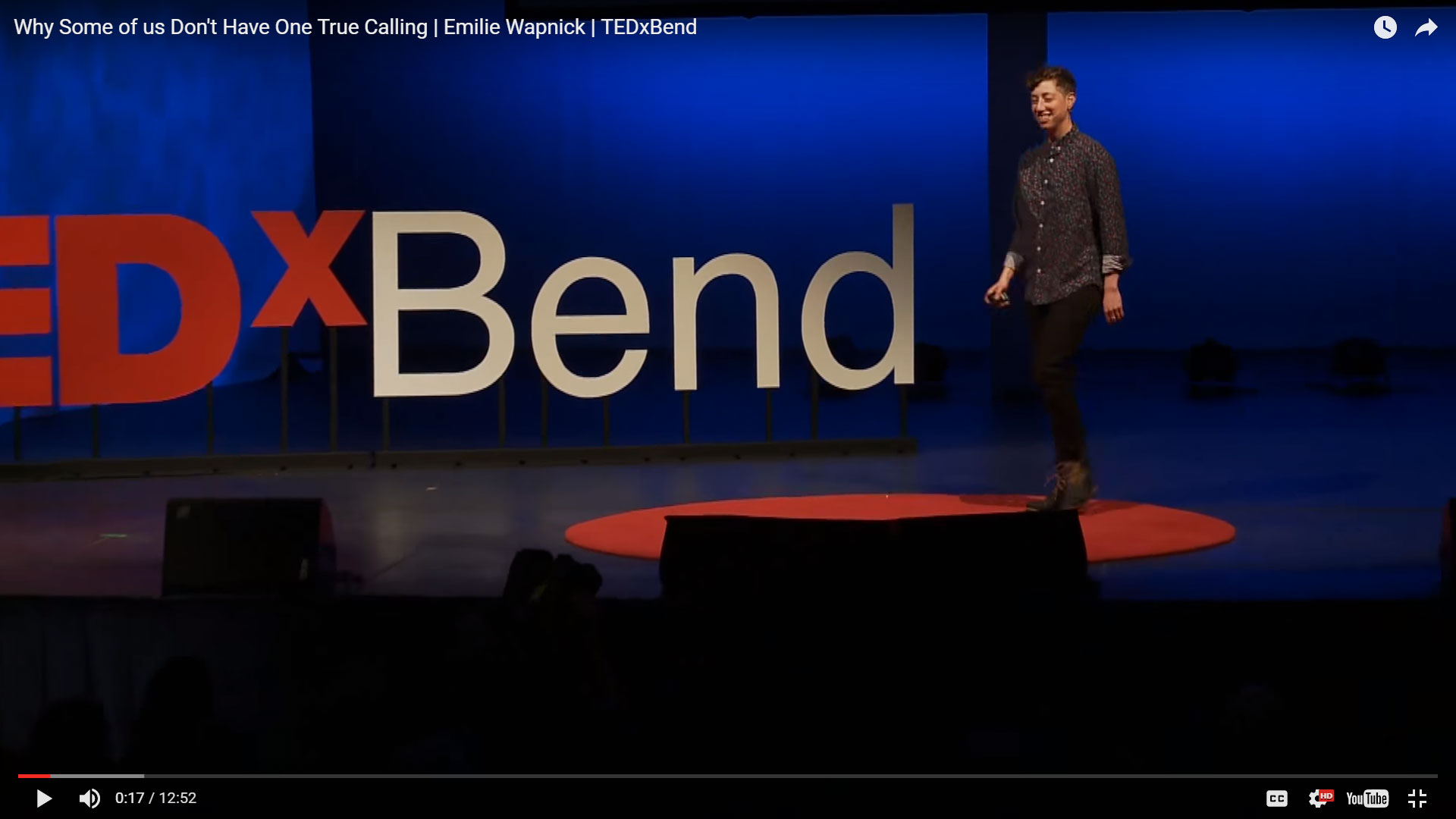
Can’t Find Your One True Calling?

A client just shared this TED Talk with me. If you have 12 minutes and have experienced anxiety with the question, “What do you want to be when you grow up?” you must watch this video. I’m now an official bSI6ImhvbWUtZmVlZDpkZXNrdG9wIiwibiI6IjAifQ
” data-miniprofile-element-key=”eyJzIjoiT1JHQU5JQyIsInUiOiJ1cm46bGk6bWVtYmVyIiwiZyI6Ik9USEVSIn0
” data-trk=”member-mention-name” data-li-miniprofile-id=”LI-9859263″ rel=”noopener noreferrer”>Emilie Wapnick
fan. Enjoy!


Blog Page, Mid Life Professionals, Uncategorized, Women in Transition

Faking It, Loving the One You’re With, and Other Temporary Fixes

You know you’ve done it. Somewhere along the line we’ve all done it.  You faked it.  You just wanted to get it over with – the day, the meeting, the week – so you delivered an Oscar-worthy performance and, surprised by how easily others can be fooled, you did what you needed to do and then got on with the rest of your world.

And then you did it again. And again.  Until one day you admit that deep down you know you should be getting more out of this than a paycheck…which you desperately need.  But don’t you deserve to enjoy it a little?

Yes, you deserve to enjoy what you do for a living.  And, your employer deserves an engaged employee.  So what happens when you know that you aren’t happy where you’re planted but, for whatever reason, you aren’t ready to make a move?

First, ask yourself this revealing question that I ask all of my career coaching clients:

Are you being  a (designer, teacher, sales manager), or are  you a (designer, teacher, sales manager)?

If you ARE what you’re doing from 9-5 you probably answered with certainty and a feeling of, “Duhh, how could I possibly be anything else?  It’s what I am.”

Clients who answer like this typically seek tactical guidance to get them back on course. We may work on their resume, focus on job search strategy or pump some new energy into their LinkedIn profile to get them to the next step of what they already know they are.  The feeling of faking it often dissipates as they begin to make some strategic adjustments.

If you are BEING your title from 9- 5, you probably answered with a sigh of frustration and something like “I’m BEING a _____, it’s not what I am.”    (a.k.a.  “I’m pretending.  I’m faking it.”)

Clients who answer this way usually want to find work that is aligned with what they know about themselves, or a way to bring more of themselves into their current situation. Many times they aren’t even sure where they belong.  It’s a different level of faking and they are drained and uninspired for most of their work day.  Even though they may be good at their job, there is no communion between who they are and what they do.

First of all, it’s important to note that probably at some point in your life you’ll find yourself being  something in order to cover the bills. It may be during your early career as you are paying your dues or during a financial or family situation that takes priority.   When that’s the case, you have to try even harder to are it  in other areas of your life to make sure you aren’t depleted.  So, if you know that you’re being it  (faking it) from 9 –5, begin to notice when you are it  outside of your day job. Who says you have to define yourself by your 9 -5 title anyway?  Oh, that’s right…the world.  Don’t listen.

I’m not saying that passion can’t equal a paycheck.   It certainly can.  But it doesn’t always.  And, rarely at every stage of life are you getting paid for doing what feels perfectly right.

Sometimes there is a little faking involved as you put in your time, try things on and discard titles that don’t fit. But you don’t want to be placed on a performance improvement plan, and you don’t want to look like a slacker,  and you don’t want your reputation to be affected just because you’re putting the puzzle together.  You also don’t want to feel this level of detachment from your work forever.

Try these mind tricks to help sustain you and keep you as engaged as possible:

  • Start telling yourself (and others if you want) your story in a new way: “I’m an organic gardener and I work as an accountant from 9 to 5.”   I’m a musician but I work as an office manager during the week.”
  • Begin to subtly infuse value into what you’re being  by seeing how it contributes to your ability to are  outside of a paycheck. (The money you make being it  affords you the resources you need to are it  in your private life.)
  • Love the one you’re with. Seek other areas in your organization that might sound interesting. The more you experiment, the more you learn. Sitting still is like dying a slow death.
  • Find ways to try to bring some of your are  into the daily being.
  • If you have ideas of what you really want to get paid to do, start taking meaningful action steps to determine what it will take to make that a reality. Doing is the bridge from BEING to AREing.

I really don’t believe that we were born to fake it through life. Even at work.  If you find yourself in that pattern, it’s a signal for you to pay attention and make some adjustments.   Play some mind tricks to create a subtle shift in perspective and to help you get unstuck.  And then, when you feel a pull that can’t be ignored, start building a little bridge….you may find what you are on the other side.

Image:  Pi from Leiden, Holland via http://commons.wikimedia.org/wiki/File:Lab_coats.jpg
Blog Page, job search anxiety, Mid Life Professionals, Uncategorized, Women in Transition

How Saying “Yes” Moves Careers

Check out these 3 scenarios where saying “yes” moved real people to the next leg of their careers.  None are over-the-top-non-relatable-stories where someone with a few million in savings chucked it all to find their bliss as a scuba instructor.  These are examples of how saying “yes” to occurrences which, in hindsight, we call “serendipitous events,” can re-chart your career course.  They may seem inconsequential at the time, but when we connect the dots and see how staying open can influence our career path, it’s worth a serious look.

1.  “Have you ever done any bookkeeping?”  L’s aunt asked.  “Some, but I’m not a fan;” L replied.  “Well,” her aunt continued, “your kids are getting older and I need to find someone to manage my part-time bookkeeping job while I head to Florida for three months this winter.  Wanna do it?”  In her head, L thought, “Why not, I can do anything for 3 months, even bookkeeping, and I’ll get paid, and I’ll see what it feels like to work part time after being home with kids for five years.” After taking a few days to consider what she would do for child care, L agreed, not knowing that this “yes” began her re-entry into the workforce. (When her aunt returned in the spring, L was asked to join the organization in a role more suited to her past experience and skill set.)

2.  “I heard that you do some freelancing on the side.  Do you want to work on some marketing materials for my business?” Already balancing work, freelance, family and more, the “Yes!” that S heard coming from his mouth surprised him.  It eventually led to a significant freelance gig and ultimately to being signed on as an employee of the company where he stayed for the next 6 years.   This new assignment allowed him to relinquish some of his more time-consuming (and stressful) freelance jobs and build on a specific product area of expertise.  His “yes” resulted in a total industry change (even though he wasn’t looking for one) and propelled his career in a new direction while achieving a level of work-life balance he never even expected.

3.  The voice on the phone said, “E, we want you to work here, in the poorest school district in the area.  With your experience, we’d love to have you.”  She thought; “Out of the burbs and into the bowels of the city?  Hmmmmm?  I’ve been teaching students in a district where bedtime stories are expected, where pantries full of food are taken for granted and test scores are highest in the state.  Why would I go teach where the school feeds their students three meals a day, where resources are scarce, and where turnover is ridiculously high?”  The answer came quietly, but with clarity; “Because I’m needed there.  There are a ton of teachers waiting to take my place at this school; they don’t need me here.  But those kids…they need me there.”  “Yes, I’ll take, it;” she answered.” (E is now on the road to making a difference in lives of disadvantaged youth and, she says, evolving as a human in ways she could have never imagined.)

Note that each person above dealt with a fear of saying yes.  Fear of becoming a working mom and all that goes with that, fear of taking on more work and upsetting family balance, fear of going from a cushy-comfortable routine to something unpredictable.  In each case, the gut instinct, the unexplained pull to say yes, trumped fear.

I’m calling for guest bloggers who are willing to share how an unplanned YES moved them in an unexpected career direction. Click for submission guidelines.

Photo credit:  Flickr via  renaissancechambara

Blog Page, Mid Life Professionals, Uncategorized, Women in Transition

Power in the Pause

As featured in Natural Awakenings Magazine, December 2013 http://www.healthylehighvalley.com/LHV/December-2013/Power-in-the-Pause/
For forty hours each week (or more) we pack up mind, body, and spirit, grab our coffee, and show up at work. Like it or not, all three parts are right there with us in the cubicle, on the shop floor, or in the big office with the best view. Our minds are engaged, our body sits or stands and moves comfortably in our work space, and our spirit feels content as we do our “work worth doing.” Or not.

Career Wellness plays a role in the mind/body/spirit equation. When things aren’t well at work, it affects how we perceive the level of wellness in our lives overall.   We bring the stress from our work back home and into our relationships. We carry it in our bodies and it affects our health.

While the demands of real life don’t always make it easy to change our work situation, we can focus on our own personal growth by practicing mindfulness in the workplace.  Google, Twitter, General Mills and other large corporations as well as a growing number of smaller companies across the country are incorporating mindfulness training into their business models. However, if we aren’t fortunate enough to work in an organization that has embraced this type of training, we can take matters into our own minds!

In its simplest form, mindfulness is turning our intention and attention to the present moment without judgment.  I like to think of mindfulness as a focused and compassionate pause.  The secret is that there is so much power in that tiny pause.

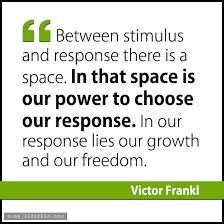
When we are mindful, we witness our thoughts and feelings as a true observer. It is from this vantage point that we are better able to choose our actions consciously, from a place of awareness and emotional intelligence. When we are mindful, we notice our foot tapping faster and faster during a meeting that is cutting into our lunch hour. We PAUSE. We notice. We accept. We choose our action.

When we act from this place of present-moment awareness, we may not like the situation, but we can take power from the pause and make better decisions than if we act from a place of frustration, anger and anxiety. Notice the stress and the anxiety. Acknowledge it. Once acknowledged, we can choose to give it power or not. Being mindful at work doesn’t mean being tolerant of challenging or negative situations. It means addressing those situations from a more focused place to increase your chances of a healthy outcome.

The scientific evidence on the effectiveness of mindfulness has grown in recent years and supports and spearheads the growing trend toward mindfulness in the workplace. WorkWithMindfulness.com is a site that provides an overarching summary of what the science of mindfulness is saying. In quoting from studies from various peer-reviewed journal papers, the site summarizes evidence that mindfulness:

  • Reduces reactivity, helping us let go of unhelpful habits and make wise choices
  • Helps regulate our nervous systems and reduces stress hormones
  • Allows us to feel more connected with others and engage in more empathetic interactions
  • And, studies show that mindfulness may help sharpen our cognitive performance; including concentration and working memory

Often, work stress comes from a sense of feeling like we are powerless in our job. Mindfulness reminds us that we are never powerless. There is power in each and every moment.  Focusing attention on the here and now stops us from handing our power over to others. “My foot is tapping? Oh, why look at that, yes it is! I’m so glad I noticed that. Now I can take a deep breath, or three, and return to this typically-annoying situation with a sense of power over how I react to it.”

If only it were that simple. Here is how I like to introduce the practice of being mindful:

  • First, become aware of the practice of mindfulness. (Pause. Notice. Accept. Act.)
  • Next, practice the practice of mindfulness.
  • Finally, keep practicing the practice of mindfulness!

When we begin the journey of being mindful, it is often easier to begin outside of the area which is causing the most stress. Instead of trying to be instantly mindful in the middle of a volatile boardroom setting, begin your practice in a more benevolent setting: while taking a walk, petting the dog, mowing the lawn or making dinner. The more we become accustomed to pausing in tranquil moments, the more naturally we will find ourselves doing it in challenging situations.

So, tomorrow morning, when we grab our coffee and head to work with mind, body, and spirit in tow, let’s pause. Find the power in that pause. Notice the texture of the coffee cup, notice the aroma and the steam; notice our body’s reaction to it. Be grateful for the way it warms our hands. And let’s start the work day by being well in that moment.

Barbara Berger, CPC, CCC is a Certified Career Coach who specializes in working with women in transition, mid-life career changers and students.  Connect at Barbara@CareerWellnessPartners.com or visit www.CareerWellnessPartners.com.

Blog Page, Mid Life Professionals, Uncategorized, Women in Transition

Systems + Processes = FUN (NOT!)

That formula was written on a sticky note and affectionately placed on my computer screen by my colleagues in my former role as a Hiring Manager.   It was no secret that I fell short when it came to details and rule-following.  My company used DISC assessments (love that tool) internally and helped clients do the same.  It was obvious that I, as a D/I, found it a real stretch to follow the systems that were put in place and necessary for others to do their jobs properly.  A business needs systems to run smoothly and I know this, but I really struggled with upholding my end of the deal.

I don’t believe I’m entitled.  I don’t believe that I have the right to NOT do things the way they are supposed to be done.  I try to follow the formulas provided to ensure a streamlined work flow but I don’t always succeed.  My files are a mess, the way I organize isn’t like everyone else’s way, and I often make it difficult for others to fulfill their responsibilities without coming back to me with things I’ve missed.  Thankfully, in that company, I worked with dedicated, professional, authentic women and we all supported each other’s strengths while acknowledging and helping to fill in where we were weak.   Every organization should be so evolved!

I’ve tried my entire life to follow the formulas.  I was constantly trying to figure out what was wrong with me and why it was so challenging to stay on a straight line.  Then I finally realized that there’s nothing wrong with me and I accepted that, for me, Systems + Processes = Hell.

Systems + Processes = Hell!

There are employees everywhere who, unlike me, may have been written up, or terminated or left to their own devices to try to keep their heads above water.  If that sounds like you, it doesn’t mean you’re not worthy.  It may mean you’re in the wrong job, maybe you’re not in a position that draws on your strengths and minimizes your weaknesses.  It may mean you have to reevaluate the types of jobs you’ve been searching for because this is a consistent theme in your work history.  Finding Career Wellness can sometimes be as easy as starting with these things:

1.  Deem yourself worthy (even though you have weaknesses).

2.  Acknowledge where you fall short.

3.  Laugh at yourself – find humor in your flaws (and in others’).

4.  Support others who are weak where you are strong.

5.  Do your best; and ask for help where you need it.

6.  Seek out positions and companies that value and utilize your strengths.

The sticky note with the formula is now proudly framed and displayed in my office.  It reminds me that I’m not perfect.  It reminds my clients that they don’t have to be perfect either. 

If you do well working with formulas, why not write your own unique formula for Career Wellness?  Once you have your formula, you are better armed to make career decisions that align with your core strengths and values.  Mine would be:

Creativity + Freedom + Relationships + Helping = JOY!

Commit to creating your own formula for 2014, either in your current role or as you seek a new position, and ask yourself if your choices fall into the formula.  Even I can see that this system, which is really just taking what your gut already knows and putting it on paper in front of you, is a necessary first step for gaining a new perspective on your life at work.

Blog Page, Uncategorized

CWP in Natural Awakenings Magazine – Nov 2013

If you haven’t picked up your copy of Natural Awakenings Magazine, Lehigh Valley Issue, for November 2013 check out Career Wellness Partners on pages 8 and 57!  Or click here for a direct link to CWP article!

The publication is a perfect fit for the mission of Career Wellness Partners in Allentown, PA.  The CWP career coaching practice is laser-focused on helping people awaken to their “work worth doing”.

Privacy Settings
We use cookies to enhance your experience while using our website. If you are using our Services via a browser you can restrict, block or remove cookies through your web browser settings. We also use content and scripts from third parties that may use tracking technologies. You can selectively provide your consent below to allow such third party embeds. For complete information about the cookies we use, data we collect and how we process them, please check our Privacy Policy
Youtube
Consent to display content from - Youtube
Vimeo
Consent to display content from - Vimeo
Google Maps
Consent to display content from - Google
Spotify
Consent to display content from - Spotify
Sound Cloud
Consent to display content from - Sound
Cart Overview