Buy Yes No Maybe Book
Category

Women in Transition

Blog Page, Images, job search anxiety, Mid Life Professionals, Uncategorized, Women in Transition

Is Fear Sabotaging Your Job Search?

Still putting off the job search you vowed to begin after the holidays?

The yearly bonus is safely in the bank.  The holidays are over.  You’re back to the grind and already feeling drained about the idea of spending another year, let alone another week, doing what you’re doing.   It’s time to start looking, but the fear of beginning your job search is paralyzing and you can’t seem to get moving.

Common among job seekers in all stages of their career, anxiety surrounds the search process.   Market conditions and state of the economy aside, it feels like you’re putting yourself in a position to be judged.   Somebody will judge you on everything from your resume format, to your education, to your work history, to your choice of interview attire.  You put yourself in front of others, and then wait to find out if you’re “good enough”.  At least that’s how it feels.  Even a healthy self-esteem can find the process daunting.

If you’re stuck, consider these tips to help change your mindset and face fears head-on so you can get out of your own way:

1.  Are you stressed because you don’t have it all figured out?  You can’t “think” yourself into the perfect job.   There is no way for you to be certain that you’re going like what’s next until you try it. Too much introspection breeds paralysis.  Think for a little while – but then act.

2.  Worried about selling yourself in an interview?  Be yourself in the interview.  There’s a difference.

3.  Transform the “I’m not good enough” worry by remembering that the Hiring Manager is considering if you’re a right match for a position; not if you’re a good and decent human being. You’re so much more than your job title.

4.  Take the “I might fail” fear and accept that you might.  You can learn tons about yourself (and what you don’t want in another job) by NOT succeeding.

5.  Afraid of putting your resume together?  Prepare.  Have someone else put their eyes on it. Get help from a pro.  Same goes for interviewing. If you are rusty, or if you know you’ve bombed before, enlist the help of a mentor for some mock interview practice.  Better to “bomb” in practice than in real life.

6.  Eliminate some of the fear of the unknown in an interview by concentrating on things you can control: your attire, arriving on time (10 minutes early), bringing a fresh copy of your resume, eye contact, general body language, questions for the Hiring Manager, etc.

7.  Set small, attainable goals.  (Warning – this may mean disturbing your comfortable routine of wine and FaceBook at night.) So, do you want to make this change or not?  Commit to some type of action each day (or every other day) to keep your job search moving.  One phone call, one resume submission, one bullet point on your resume is a step.

Fear leads to overthinking which leads to anxiety which leads to paralysis which keeps you stuck.  Action, no matter how small, can interrupt the fear and allow you to feel a sense of control over the process.  Once you feel like you have some control over the stress of the search, maybe you’ll even want to consider turning any remaining fear into curiosity.  And that’s when the magic really happens.

Blog Page, Mid Life Professionals, Uncategorized, Women in Transition

Power in the Pause

As featured in Natural Awakenings Magazine, December 2013 http://www.healthylehighvalley.com/LHV/December-2013/Power-in-the-Pause/
For forty hours each week (or more) we pack up mind, body, and spirit, grab our coffee, and show up at work. Like it or not, all three parts are right there with us in the cubicle, on the shop floor, or in the big office with the best view. Our minds are engaged, our body sits or stands and moves comfortably in our work space, and our spirit feels content as we do our “work worth doing.” Or not.

Career Wellness plays a role in the mind/body/spirit equation. When things aren’t well at work, it affects how we perceive the level of wellness in our lives overall.   We bring the stress from our work back home and into our relationships. We carry it in our bodies and it affects our health.

While the demands of real life don’t always make it easy to change our work situation, we can focus on our own personal growth by practicing mindfulness in the workplace.  Google, Twitter, General Mills and other large corporations as well as a growing number of smaller companies across the country are incorporating mindfulness training into their business models. However, if we aren’t fortunate enough to work in an organization that has embraced this type of training, we can take matters into our own minds!

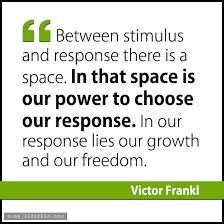
In its simplest form, mindfulness is turning our intention and attention to the present moment without judgment.  I like to think of mindfulness as a focused and compassionate pause.  The secret is that there is so much power in that tiny pause.

When we are mindful, we witness our thoughts and feelings as a true observer. It is from this vantage point that we are better able to choose our actions consciously, from a place of awareness and emotional intelligence. When we are mindful, we notice our foot tapping faster and faster during a meeting that is cutting into our lunch hour. We PAUSE. We notice. We accept. We choose our action.

When we act from this place of present-moment awareness, we may not like the situation, but we can take power from the pause and make better decisions than if we act from a place of frustration, anger and anxiety. Notice the stress and the anxiety. Acknowledge it. Once acknowledged, we can choose to give it power or not. Being mindful at work doesn’t mean being tolerant of challenging or negative situations. It means addressing those situations from a more focused place to increase your chances of a healthy outcome.

The scientific evidence on the effectiveness of mindfulness has grown in recent years and supports and spearheads the growing trend toward mindfulness in the workplace. WorkWithMindfulness.com is a site that provides an overarching summary of what the science of mindfulness is saying. In quoting from studies from various peer-reviewed journal papers, the site summarizes evidence that mindfulness:

  • Reduces reactivity, helping us let go of unhelpful habits and make wise choices
  • Helps regulate our nervous systems and reduces stress hormones
  • Allows us to feel more connected with others and engage in more empathetic interactions
  • And, studies show that mindfulness may help sharpen our cognitive performance; including concentration and working memory

Often, work stress comes from a sense of feeling like we are powerless in our job. Mindfulness reminds us that we are never powerless. There is power in each and every moment.  Focusing attention on the here and now stops us from handing our power over to others. “My foot is tapping? Oh, why look at that, yes it is! I’m so glad I noticed that. Now I can take a deep breath, or three, and return to this typically-annoying situation with a sense of power over how I react to it.”

If only it were that simple. Here is how I like to introduce the practice of being mindful:

  • First, become aware of the practice of mindfulness. (Pause. Notice. Accept. Act.)
  • Next, practice the practice of mindfulness.
  • Finally, keep practicing the practice of mindfulness!

When we begin the journey of being mindful, it is often easier to begin outside of the area which is causing the most stress. Instead of trying to be instantly mindful in the middle of a volatile boardroom setting, begin your practice in a more benevolent setting: while taking a walk, petting the dog, mowing the lawn or making dinner. The more we become accustomed to pausing in tranquil moments, the more naturally we will find ourselves doing it in challenging situations.

So, tomorrow morning, when we grab our coffee and head to work with mind, body, and spirit in tow, let’s pause. Find the power in that pause. Notice the texture of the coffee cup, notice the aroma and the steam; notice our body’s reaction to it. Be grateful for the way it warms our hands. And let’s start the work day by being well in that moment.

Barbara Berger, CPC, CCC is a Certified Career Coach who specializes in working with women in transition, mid-life career changers and students.  Connect at Barbara@CareerWellnessPartners.com or visit www.CareerWellnessPartners.com.

Blog Page, Mid Life Professionals, Uncategorized, Women in Transition

Systems + Processes = FUN (NOT!)

That formula was written on a sticky note and affectionately placed on my computer screen by my colleagues in my former role as a Hiring Manager.   It was no secret that I fell short when it came to details and rule-following.  My company used DISC assessments (love that tool) internally and helped clients do the same.  It was obvious that I, as a D/I, found it a real stretch to follow the systems that were put in place and necessary for others to do their jobs properly.  A business needs systems to run smoothly and I know this, but I really struggled with upholding my end of the deal.

I don’t believe I’m entitled.  I don’t believe that I have the right to NOT do things the way they are supposed to be done.  I try to follow the formulas provided to ensure a streamlined work flow but I don’t always succeed.  My files are a mess, the way I organize isn’t like everyone else’s way, and I often make it difficult for others to fulfill their responsibilities without coming back to me with things I’ve missed.  Thankfully, in that company, I worked with dedicated, professional, authentic women and we all supported each other’s strengths while acknowledging and helping to fill in where we were weak.   Every organization should be so evolved!

I’ve tried my entire life to follow the formulas.  I was constantly trying to figure out what was wrong with me and why it was so challenging to stay on a straight line.  Then I finally realized that there’s nothing wrong with me and I accepted that, for me, Systems + Processes = Hell.

Systems + Processes = Hell!

There are employees everywhere who, unlike me, may have been written up, or terminated or left to their own devices to try to keep their heads above water.  If that sounds like you, it doesn’t mean you’re not worthy.  It may mean you’re in the wrong job, maybe you’re not in a position that draws on your strengths and minimizes your weaknesses.  It may mean you have to reevaluate the types of jobs you’ve been searching for because this is a consistent theme in your work history.  Finding Career Wellness can sometimes be as easy as starting with these things:

1.  Deem yourself worthy (even though you have weaknesses).

2.  Acknowledge where you fall short.

3.  Laugh at yourself – find humor in your flaws (and in others’).

4.  Support others who are weak where you are strong.

5.  Do your best; and ask for help where you need it.

6.  Seek out positions and companies that value and utilize your strengths.

The sticky note with the formula is now proudly framed and displayed in my office.  It reminds me that I’m not perfect.  It reminds my clients that they don’t have to be perfect either. 

If you do well working with formulas, why not write your own unique formula for Career Wellness?  Once you have your formula, you are better armed to make career decisions that align with your core strengths and values.  Mine would be:

Creativity + Freedom + Relationships + Helping = JOY!

Commit to creating your own formula for 2014, either in your current role or as you seek a new position, and ask yourself if your choices fall into the formula.  Even I can see that this system, which is really just taking what your gut already knows and putting it on paper in front of you, is a necessary first step for gaining a new perspective on your life at work.

Blog Page, Mid Life Professionals, Uncategorized, Women in Transition

Your White-Space Resume

What is it about the white space on a resume that calls to me?  Is it the fact the using white space appropriately makes for a more visually appealing document?  Is it because one-inch margins are standard?  Nah.  I love white space on a resume because white space is where all the good stuff happens.  It’s where the nitty-gritty answers are and where change can begin.

The image above is a picture of what the white space looks like in a few of the books from my personal library.  (One of the many reasons that I remain passionately opposed to e-readers is because of my addiction to white space.  And, yes, I know you can highlight and make notes with them but it’s not the same to me.)  You can see that the words on these pages elicited a response that was strong enough for me to capture in the margins.  I obviously didn’t want to forget what those words made me feel.  I use smiley faces, or stars, or “OMG!”. (Pages with a scribbled upright middle finger were strategically withheld from this shot.)  I write notes and ideas and names of events or people of whom I’m reminded.    The white space holds my reaction to what the words on the page say. The same is true for your resume.

Take a minute to pull up your resume. Go ahead.  I’ll wait.

Read the expertly-crafted words and strategic phrases.  Look how professionally the last 10 years of your work history is chronicled.  No doubt there are bulleted lists beginning with action buzzwords like created, implemented, pioneered, executed, presented, etc.  There is no argument that Hiring Managers need to see those accomplishments, but if the manager is serious about hiring the right person for the job, they will want to know what that candidate feels in their gut when they do these things…do they feel strong when they create a system?  Do they feel totally zapped of energy when they have to do a presentation at the board meeting?   As a job seeker, if the words on your resume list jobs, skills and  experiences that are light years away from how you feel when you’re actually doing those tasks, you are probably not very content in your role.

Career Wellness is about learning to read between the lines on your resume.   You have to learn how to read the white spaces because everything interesting and everything important is found there.  The reasons why you’re unhappy, the reasons why you’re tired and bored and the answers for how to align your career with your overall well-being are just waiting to be excavated.

Ever wonder what your resume would look like if you searched the white spaces?  Contact me for one-on-one exploration of your white space.   Or, for more information about a group White-Space ResumeTM Workshop, email me at Barbara@careerwellnesspartners.com.

Blog Page, Mid Life Professionals, Uncategorized, Women in Transition

Lights. Camera. ACTION!

But what if there are no lights.   And, what if there is no camera?  What if all you have is that little voice inside that keeps whispering “Action”?  That voice is telling you, over and over again, in different ways, how to become the Director of your own life.  Will you trust that voice to direct your first step?   It’ll do a better job than Spielberg or Scorsese ever could because, after all, this is your life.   That little whisper (which often becomes a shout if you ignore it) is nobody else’s but yours.  If you feel that you’ve been acting in someone else’s movie until now, it’s time for action.

Whether you’ve been sitting in the same cubicle for 15 years, or you’re re-entering the workforce after some time away, or you’re trying to find work that aligns with your core values, making a decision to change can be unnerving.

You think about what that little voice is telling you. And you think.  And think. Until you find that you’ve thought yourself into a state of paralysis; making it almost impossible to take action.  That’s really just fear. Honoring the voice doesn’t mean you have to do a 180° right there on the spot.  It means that introspection will only take you so far.  Action, often the smallest step, is what you need to honor the internal whisper and start your shift to Career Wellness.

I must share a few lines from “You Don’t Need to Know How to Do It.  You Just Need to Start;” an article by Ishita Gupta, Publisher of fear.less Magazine.  It’s a great compilation of the things we think we need before we take any action.  Believing we need these things causes paralysis:

“You don’t have to have the best team, the right website, or be an expert. You have everything you need right now; you just need the courage to act. 

You don’t have to wait for investors or your boss to notice your smarts.  You recognize it first.

You don’t have to feel guilty for spending time on what makes you happy.  You do have to worry if you never listen to the voice inside you.”

Read the full article here.  I bet you’ll recognize a few of these paralyzing “must-have” thoughts.

Self-reflection is definitely part of your career development, but it can be the very thing that keeps you feeling like you are an actor in someone else’s movie.  As Herminia Ibarra states in her book Working Identity, “Sometimes all we know at the start is that we want to be somewhere else.”

We rarely know where we are going to end up; but taking one tiny step can change the course of your story and help direct your career in a way that aligns with that little voice.   Can you hear it? (Because it’s screaming now.)  “Annnnd ACTION!”

1 2
Privacy Settings
We use cookies to enhance your experience while using our website. If you are using our Services via a browser you can restrict, block or remove cookies through your web browser settings. We also use content and scripts from third parties that may use tracking technologies. You can selectively provide your consent below to allow such third party embeds. For complete information about the cookies we use, data we collect and how we process them, please check our Privacy Policy
Youtube
Consent to display content from - Youtube
Vimeo
Consent to display content from - Vimeo
Google Maps
Consent to display content from - Google
Spotify
Consent to display content from - Spotify
Sound Cloud
Consent to display content from - Sound
Cart Overview